
Which Valve is Best for Replacement?
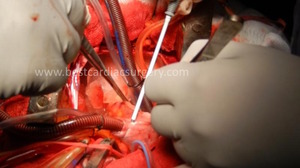
One of the most common concerns for patients undergoing heart valve replacement is choosing the right valve. There are two main types of prosthetic heart valves:
 Mechanical Valves – Made from artificial materials such as pyrolytic carbon or high-density polyethylene. Tissue Valves (Bioprosthetic Valves) – Made from porcine (pig) or bovine (cow) tissue.
Percutaneous valves, especially for aortic valve replacement are growing in popularity and if used judiciously, will give very good long term results. However, comparative study with surgical AVR (SAVR) only shows better short term benefits compared to SAVR. in fact, present studies show a very good long term results of SAVR compared to TAVR. Yet in cases of high risk SAVR, TAVR will be the method of choice. One must understand that the primary view point should be the “patient first” dictum in making any decision and there should not be a business or market driven decision. This is important for both the treating physicians as well as the patients to know this.
MECHANICAL HEART VALVES
 Durability: Lasts a lifetime with proper care. Material: Rigid structure, often made from pyrolytic carbon. Requires Lifelong Anticoagulants: Blood thinners such as warfarin or nicoumarol must be taken to prevent clot formation. The INR (International Normalized Ratio) should be monitored regularly:
- Aortic Valve: INR range 1.5 – 3.5
- Mitral Valve: INR range 2.0 – 4.0 Infection Risk: Risk of infective endocarditis (serious infection). Complications: Over time, mechanical valves can develop pannus (scar tissue), which may require re-replacement surgery. Re-replacement is rare in mechanical valves however every re-replacement is more risky than a primary operation
TISSUE (BIOPROSTHETIC) HEART VALVES
No Lifelong Blood Thinners: Anticoagulants are needed only for 2-3 months unless the patient has atrial fibrillation. Lower Risk of Infection: More resistant to infective endocarditis. Best for Certain Patients:
- Elderly patients who may not tolerate long-term anticoagulation.
- Patients planning pregnancy to avoid blood thinner complications. Durability Concerns: Tissue valves can degenerate over time, leading to stenosis or leakage, requiring re-replacement surgery.
- porcine valves are made from the valve leaflets of actual specially bred pigs and were considered as better due to their shape resembling human aortic valve leaflets. degeneration was less in the early days of valve replacement history
- Bovine tissue valves are made from the pericardium or covering of the heart of the cows and the tissue is treated with chemicals so that the calcium deposition and the degeneration is reduced or impeded. The same bovine tissue is now used to make trans-catheter valves and the technology has advanced to give much longer life for these valves
- eventually, a certain percentage of the tissue valves will degenerate, tear or calcify and may need surgery for replacement. Although the time for degeneration to occur has been prolonged due to scientific advancements, there is a situation that re-replacement of the valve may be needed at some stage. Thus the guidelines advise that the valves must be used for elderly people (>65 years) or female patients in childbearing age group to avoid anticoagulant related complications and in patients with established endocarditis (infection in the heart valves) as tissue valves are more resistant to infection than otherwise.
TAVR is a minimally invasive heart valve replacement procedure, ideal for high-risk patients such as the elderly or those with severe aortic stenosis. It avoids open-heart surgery by implanting a new valve through a catheter inserted via the femoral artery (leg), arm, neck, or directly into the aorta.
Benefits of TAVR: No need for cardiopulmonary bypass in most cases. Faster recovery than traditional valve surgery. Ideal for elderly or high-risk patients. Reduced hospital stay.
 Possible Risk: Some patients may experience heart block, requiring a pacemaker.
TAVR valves are essentially tissue valves and hence they are also subject to the rule of degeneration. In such a situation, one may need to do a repeat TAVR or may need to replace the valve totally. Redo surgeries are rather complicating and more difficult than usual redo surgeries.